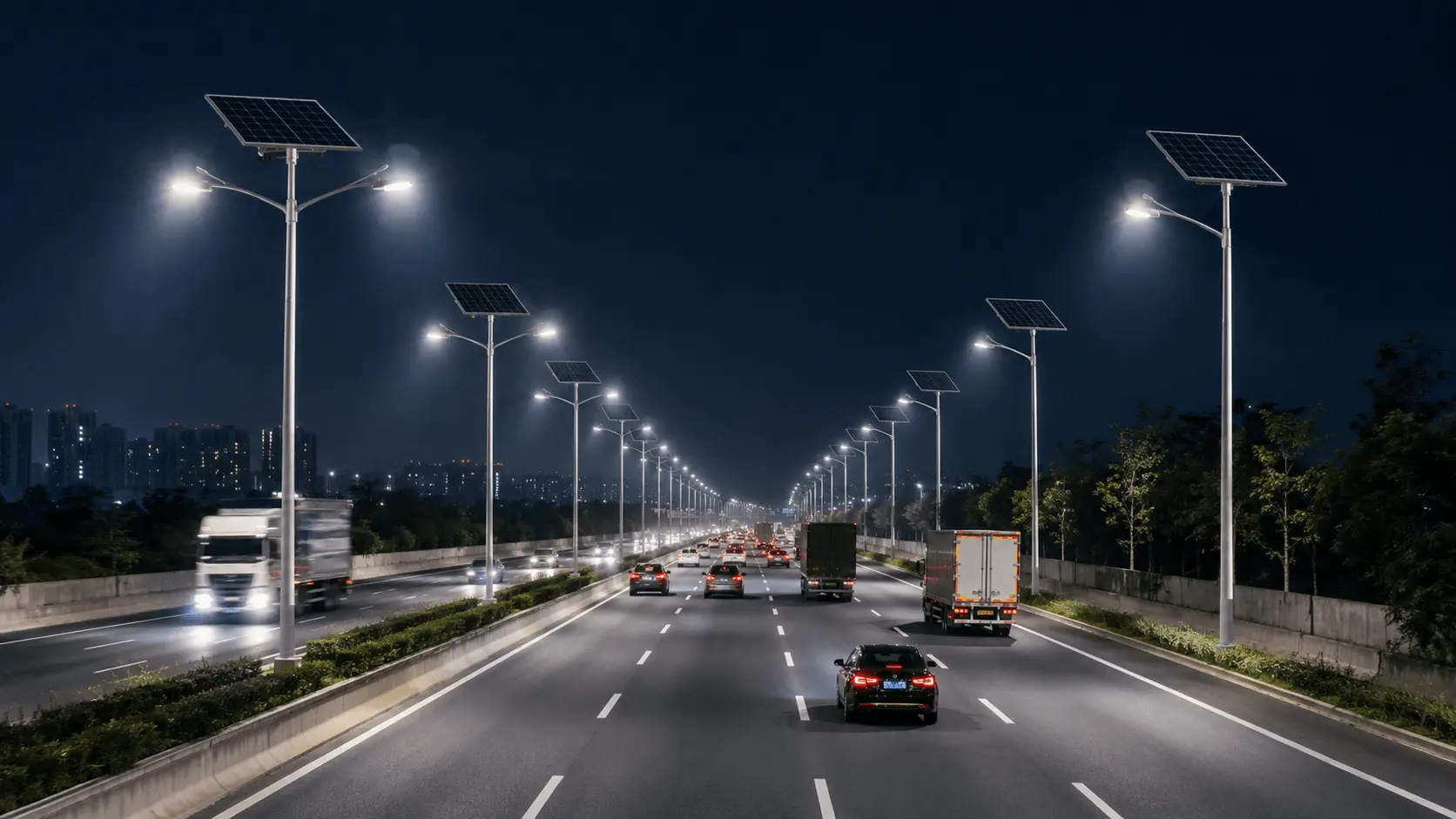
FIFA LED stadium light smart system supplier in Bolivia


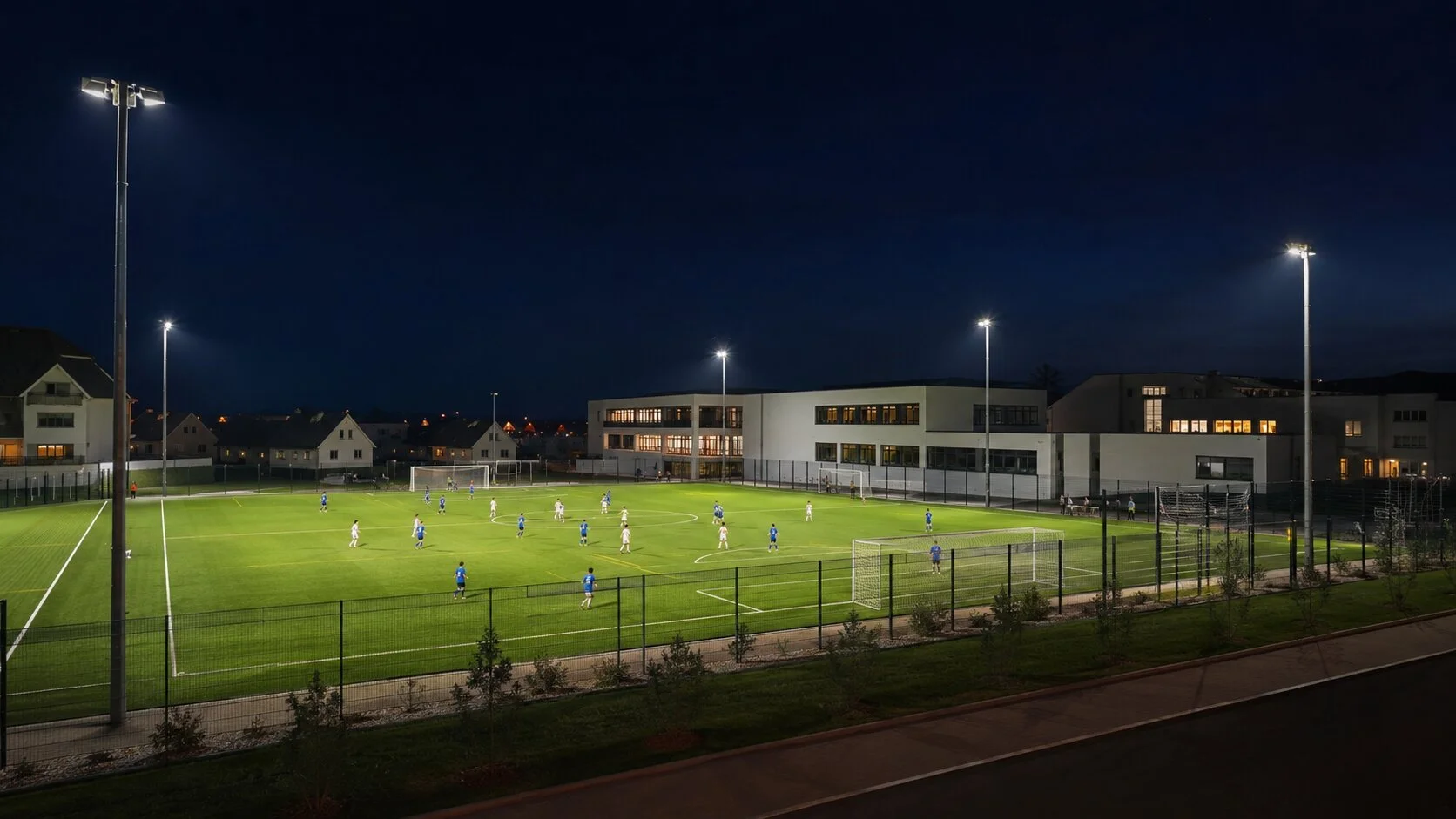
Properly designed white LED lighting used under normal conditions is not known to cause direct eye damage in healthy children.
The European Commission’s Scientific Committee on Health, Environmental and Emerging Risks concluded that there was no evidence of direct adverse health effects from LED emissions during normal use by the general healthy population. The International Commission on Illumination also states that blue-light hazard is generally not an issue for white-light sources used for general lighting.
However, this does not mean that every LED installation is equally comfortable or appropriate.
Poorly designed lighting can cause:
Discomfort glare
Temporary eye strain
Headaches or visual fatigue
Distracting flicker
Excessive contrast
Light entering nearby homes
Sleep disruption from inappropriate evening exposure
The important question is therefore not simply whether a fixture uses LEDs. The better question is:
Has the lighting system been designed to control brightness, glare, flicker, light distribution and operating time?
The phrase “hurt children’s eyes” can describe several different issues.
Permanent retinal injury generally requires exposure conditions that are very different from ordinary general lighting, such as staring directly into an extremely bright source.
White LED luminaires used for normal illumination should be assessed according to recognized photobiological safety requirements. IEC 62471 and IEC 62471-7 provide methods for assessing potential optical radiation hazards from lamps, light sources and luminaires.
Children should still not stare directly into a powerful LED floodlight, stadium light or exposed LED module. This is a basic precaution that also applies to other intense light sources.
A light does not need to cause physical eye damage to be uncomfortable.
Excessive brightness, glare, reflected light and poor contrast can make it harder to see, causing children to squint or experience temporary eye fatigue.
The U.S. Department of Energy’s school-lighting guidance specifically identifies glare and flicker as important lighting-quality concerns. It advises schools to evaluate light quantity, distribution, color appearance and visual comfort instead of selecting products by wattage or efficiency alone.
Light also affects the body’s sleep–wake cycle.
Bright or blue-enriched light during the daytime can support alertness, but excessive light exposure close to bedtime may make it more difficult to prepare for sleep. The CIE recommends higher light exposure during the day, lower exposure during the three hours before bedtime and near-darkness during sleep.
This is mainly an issue of timing, duration and intensity—not evidence that ordinary white LEDs are physically damaging the eye.
White LEDs contain some blue wavelengths, particularly products with a higher correlated color temperature.
However, the presence of blue wavelengths does not automatically mean that a light presents a blue-light hazard.
The CIE states that the blue-light hazard exposure from LED and incandescent lamps is similar when the sources have comparable color temperatures. It also considers blue-light hazard unlikely to be a problem for normal white general lighting.
Extra caution is appropriate with:
Intense blue indicator lights
Products emitting mainly blue or violet light
Exposed high-luminance LED chips
Fixtures viewed directly at close range
Children’s products containing bright blue point sources
Children’s eyes can be more sensitive to blue light, and bright blue point sources may be especially dazzling for young children. The European scientific review identified this as a particular concern for children under approximately three years old.
That concern should not be incorrectly extended to every properly diffused white LED luminaire.
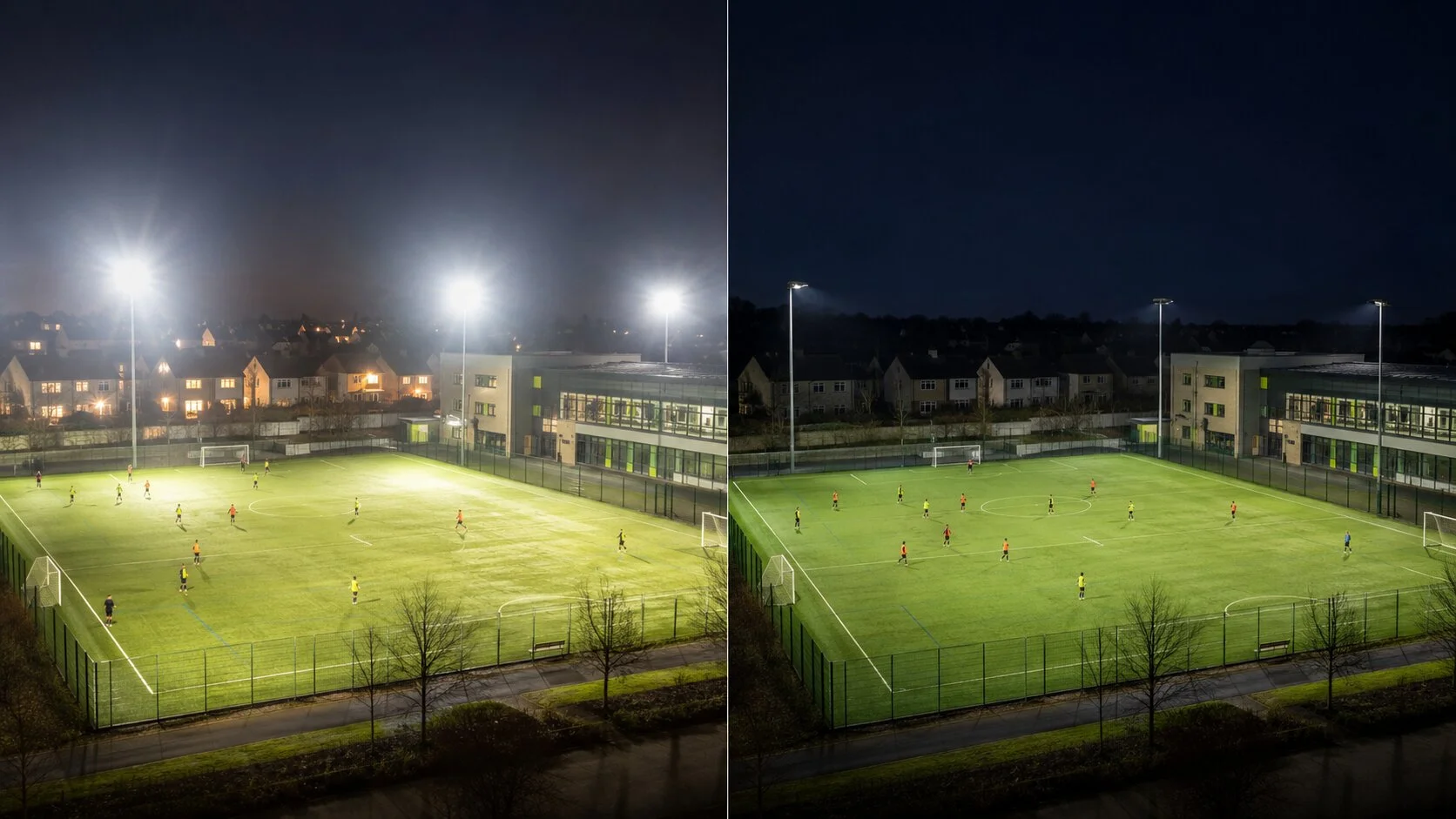
Glare occurs when a light source is excessively bright compared with its surroundings or is positioned directly within a person’s field of view.
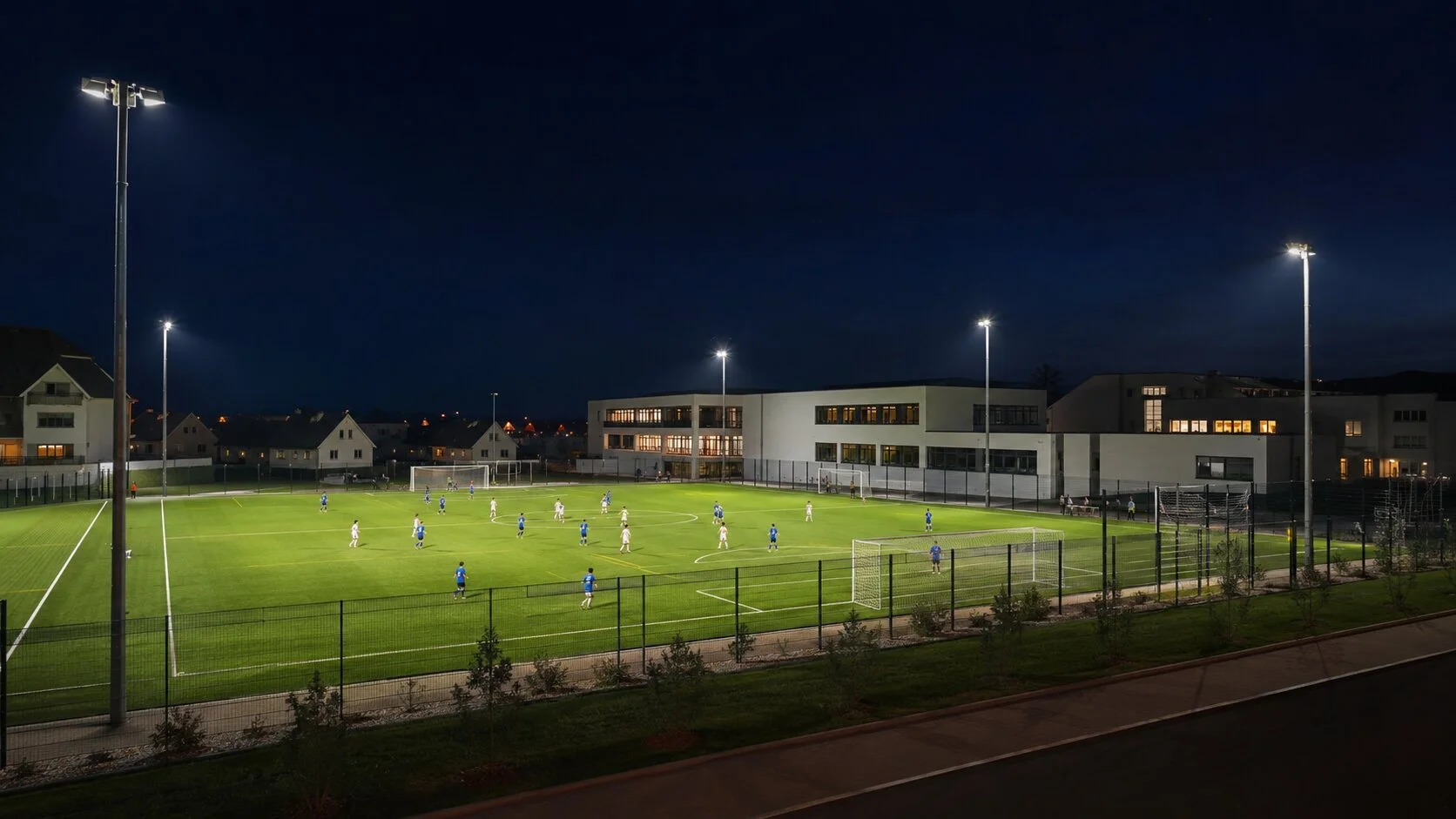
This is especially important in outdoor sports lighting because high-output fixtures are often mounted against a dark night sky.
A poorly aimed luminaire may provide enough lux on the ground while still causing discomfort to:
Children looking upward to follow a ball
Goalkeepers facing elevated floodlights
Spectators
Residents in nearby buildings
Drivers passing the site
Glare is influenced by several factors:
Luminaire luminance
Mounting height
Aiming angle
Beam angle
Position within the field of view
Background brightness
Optical shielding
Distance from the observer
The U.S. Department of Energy notes that glare depends strongly on the relative position of the light source, the viewer and the object being viewed. Avoiding exposed or unshielded light sources is an important design consideration.
For school and sports projects, buyers should evaluate anti-glare LED sports lighting, not simply choose the fixture with the highest lumen output.
LED technology does not automatically produce problematic flicker.
Flicker and other forms of temporal light modulation are usually related to the LED driver, electrical supply, dimming system and control method. A well-designed driver can significantly reduce light-output modulation.
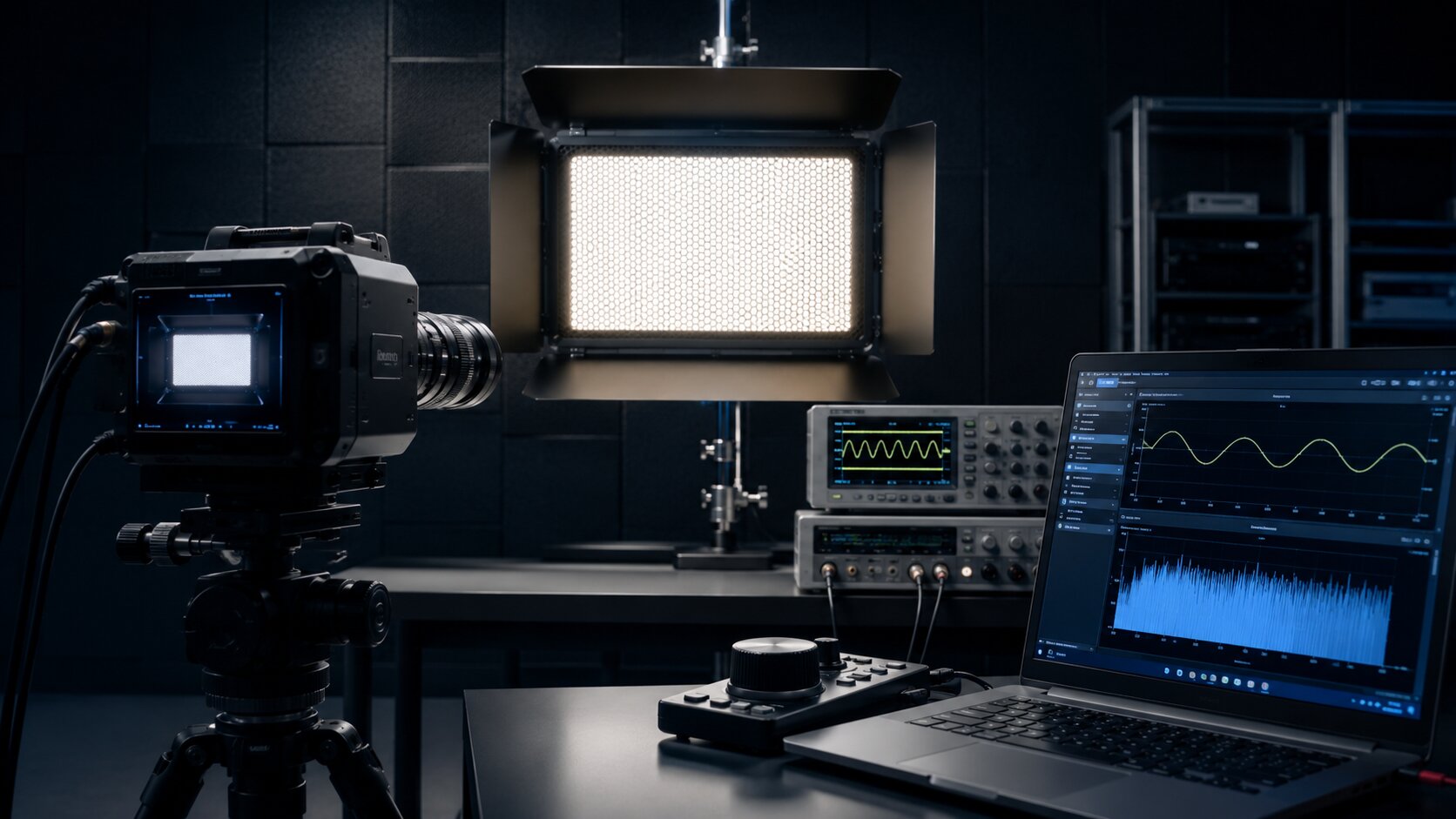
Some flicker is visible, while other modulation may not be consciously noticed. Temporal light modulation can produce visual effects such as flicker, phantom arrays and stroboscopic effects. Research and lighting standards therefore use measurements rather than relying only on whether a person can see a lamp flashing.
IEEE 1789 provides recommended practices for modulating current in high-brightness LEDs and discusses frequencies and modulation conditions that may present risks or discomfort.
For a school, gymnasium or sports-lighting project, a supplier should be able to provide information about:
LED driver quality
Flicker measurements
Performance at full output
Performance when dimmed
Compatibility with the control system
High-speed camera performance where broadcasting is required
Buyers can also ask for PstLM and SVM measurements when they are relevant to the market and application. These metrics are used in European lighting regulations to evaluate flicker and stroboscopic visibility.
A vague statement such as “flicker-free” is less useful than an actual test report.
No.
A brighter fixture is not automatically a better fixture, and excessive light does not necessarily improve visibility.
Visual performance depends on:
Appropriate illuminance
Uniformity
Contrast
Optical distribution
Glare control
Surface reflectance
Color quality
The visual task being performed
A field with very bright areas and dark areas may be more difficult to use than a field with a slightly lower but more uniform lighting level.
For sports facilities, the goal should be to deliver the required light to the playing surface and relevant vertical planes without exposing players to unnecessarily bright sources.
This is why a sports lighting photometric simulation is more valuable than comparing wattage alone.
A professional simulation can evaluate:
Average and minimum illuminance
Uniformity
Luminaire quantity
Mounting height
Pole position
Aiming direction
Spill light
Glare
Lighting around goals, sidelines and spectator areas
There is no single color temperature that is universally safest for every child or every project.
Higher color temperatures generally produce a cooler appearance and usually contain a greater proportion of short-wavelength light. Lower color temperatures appear warmer.
The correct selection depends on:
Location
Operating time
Required visibility
Color-rendering requirements
Broadcasting requirements
Surrounding residential areas
Local regulations
The U.S. Department of Energy notes that most U.S. interior spaces commonly use sources between 3000 K and 4000 K, while also emphasizing that color quality and appearance should be evaluated as part of the complete lighting design.
For an outdoor school or community field used late in the evening, project owners should avoid selecting an unnecessarily high color temperature only because it appears brighter.
Color temperature must not be considered in isolation. Spectrum, illuminance, operating time and light reaching the eyes all influence the result.
Light from a room luminaire is different from prolonged near work on a phone or tablet.
The American Academy of Ophthalmology states that there is no scientific evidence that blue light from digital devices damages the eyes. The discomfort associated with long screen use is more commonly linked to reduced blinking, dryness and sustained near focusing.
Screen-related symptoms can include:
Dry or itchy eyes
Temporary blurred vision
Headaches
Difficulty refocusing
Neck and shoulder discomfort
These symptoms do not prove that the LED backlight has injured the retina.
Regular breaks, comfortable screen brightness, appropriate viewing distance and more outdoor activity are generally more relevant than relying only on blue-light-filtering glasses.
A responsible procurement process should evaluate the complete lighting system.
Ask whether the luminaire has been evaluated under an appropriate standard such as IEC 62471 or IEC 62471-7.
Use suitable optics, shielding, visors or louvers where necessary. Avoid placing intense LED sources directly within common player and spectator viewing directions.
The simulation should include illuminance, uniformity, pole positions, aiming information and glare or spill-light evaluation where required.
A fixture may perform well at full output but produce more modulation when dimmed. Test the driver together with the intended control system.
Specify the output required by the project rather than choosing the highest available wattage.
Consider the application, operating time, surrounding environment and local requirements.
Light falling behind the luminaire or into nearby windows does not improve the playing surface. Appropriate optical control can improve both visual comfort and project efficiency.
Because glare and visual comfort are affected by context, an on-site mock-up or pilot installation can reveal issues that are difficult to understand from a specification sheet alone. The U.S. Department of Energy recommends visually reviewing school-lighting products in place before completing a large procurement.
Before approving an LED lighting system for a school, playground or sports facility, request:
IEC 62471 or applicable photobiological safety information
IES or LDT photometric files
DIALux or equivalent lighting simulation
Average and minimum illuminance
Uniformity results
Glare-control information
Backlight and spill-light control
Flicker or temporal light modulation test data
Driver and dimming compatibility
Color temperature and color-rendering data
Pole height and aiming schedule
High-speed camera test where relevant
Product warranty
Similar project references
Current evidence does not show direct eye damage from normal use of properly designed white LED general lighting in healthy children. Poor glare control, extreme brightness or direct viewing can still cause discomfort.
A higher color temperature normally includes a greater proportion of blue wavelengths, but this alone does not mean the product is dangerous. Exposure level, duration, viewing direction and optical design must also be considered.
Low temporal light modulation is an important lighting-quality objective. Buyers should request measured performance rather than accepting an unsupported “flicker-free” label.
Properly installed stadium lights should not be aimed directly into normal viewing positions. Poor aiming, exposed high-luminance LEDs and inadequate glare control can create discomfort even when the field reaches its target lux level.
No. Anti-glare optics are only one part of the system. Photobiological safety, flicker, brightness, aiming, color temperature, uniformity and operating time must also be evaluated.
The American Academy of Ophthalmology does not recommend special blue-light eyewear for ordinary computer use because evidence of benefit is insufficient. Anyone experiencing persistent symptoms should consult a qualified eye-care professional.
LED lights are not automatically harmful to children’s eyes.
A properly designed LED lighting system can provide efficient, uniform and comfortable illumination for schools, playgrounds and sports facilities. Problems are more likely to result from poor optical design, excessive brightness, glare, flicker, incorrect aiming or inappropriate nighttime use than from LED technology itself.
For project owners, the correct question is not:
Are LEDs safe?
It is:
Has this LED lighting system been tested, simulated and designed for the people who will use the space?
HISHINE supports school and LED sports lighting projects with configurable optics, project-specific photometric planning and lighting solutions designed to reduce glare, unwanted spill light and visual discomfort.
Provide the field dimensions, pole positions, mounting height and required lighting level to receive a project-specific lighting recommendation.
Author 2024-08-06
LED technology itself is not automatically harmful to children’s eyes. This guide explains the differences between permanent eye damage, temporary visual discomfort and sleep disruption, while showing...
Author 2026-07-29
All-in-one and split solar street lights each offer different advantages. This guide compares their system structure, installation, solar panel flexibility, battery capacity, maintenance, cost, and su...